
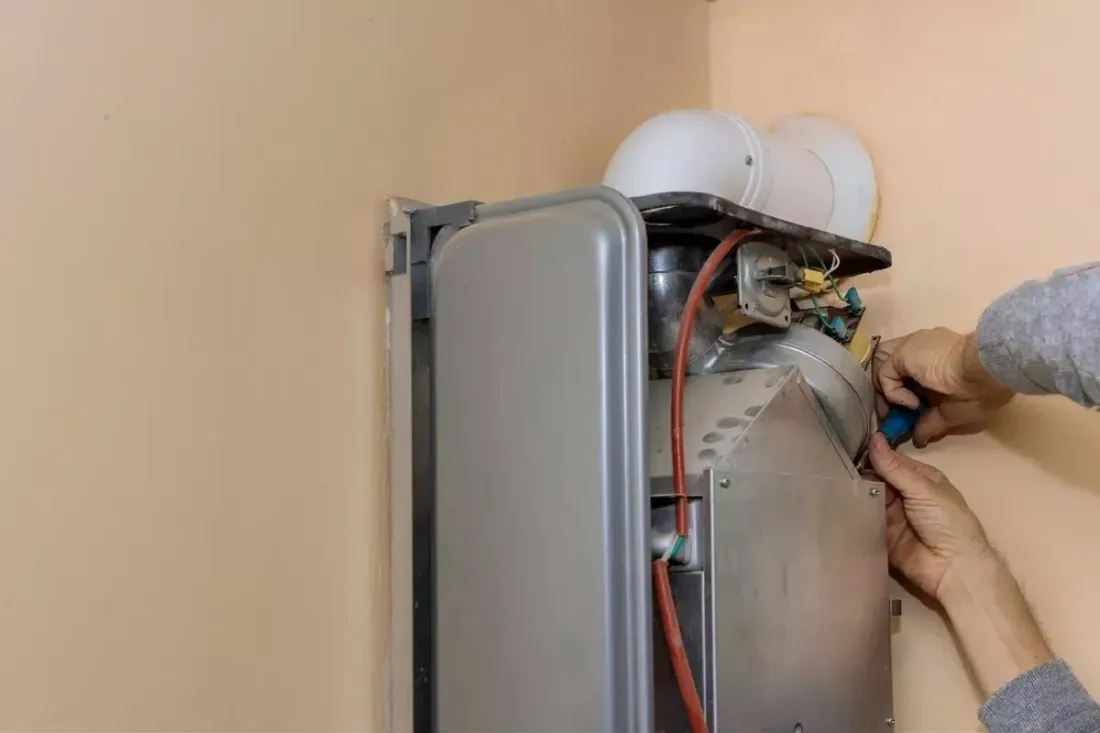
A new gas boiler runs most Minnesota homeowners $4,000 to $11,000, installed. Standard models sit at the low end. High-efficiency units cost more up front and cut your gas bills every winter after.
The final price comes down to five things, the size you need, the efficiency you pick, whether you are switching fuels, the labor, and the permits. Here is what each one costs in 2026, and where your home is likely to land.
2026 gas boiler prices at a glance
| What you are paying for | Installed cost (2026) |
|---|---|
| Standard-efficiency gas boiler (80 to 89% AFUE) | $4,000 to $7,000 |
| High-efficiency condensing boiler (90 to 95%+ AFUE) | $6,000 to $11,000 |
| Combi boiler (heat plus hot water) | $6,000 to $10,000 |
| Convert to gas or run a new gas line | $500 to $2,000 |
| City permit | $50 to $300 |
| Old boiler removal and disposal | $200 to $500 |
The national average for a gas boiler lands near $6,000. Minnesota winters push many homes toward the higher end, because a boiler here has to keep up on a below-zero night.
What changes the price
Boiler size (BTUs). BTUs measure how much heat the boiler puts out. A rule of thumb is 25 to 50 BTUs per square foot. Cold climates like ours sit at the top of that range. A bigger boiler costs more, but an undersized one runs nonstop and wears out early. Sizing is a load calculation, not a guess.
Efficiency (AFUE). AFUE tells you how much of your gas turns into heat. Standard boilers rate 80 to 89%. High-efficiency condensing boilers hit 90 to 95% or more. The high-efficiency unit costs a few thousand more, and it trims 10 to 20% off your heating bill. Over a 15-year life in Minnesota, that adds up.
Switching from oil or propane. Plenty of older Twin Cities homes still run on oil or propane. Moving to natural gas means running a gas line, checking your other appliances, and pulling the old tank. Budget $500 to $2,000 for the line, or $15 to $50 per foot for a long run.
Labor. The install itself runs $1,200 to $3,200. A straight swap is faster and cheaper. A fuel conversion or a tricky basement layout takes longer.
Permits. Minneapolis, St. Paul, and the suburbs all require a permit and an inspection for a boiler swap. That is $50 to $300, and it protects you. A permitted job gets checked for safe venting and gas connections.
Cost by home size
| Home size | Typical BTUs | Installed cost |
|---|---|---|
| 1,000 sq ft | 30,000 to 45,000 | $4,000 to $6,200 |
| 2,000 sq ft | 60,000 to 90,000 | $5,100 to $7,800 |
| 3,000 sq ft | 90,000 to 135,000 | $6,100 to $10,000 |
These are starting ranges for a gas boiler. Your insulation, window count, and how the home was built all move the number.
High-efficiency boilers pay you back
A condensing boiler at 95% AFUE costs more the day it goes in. Then it saves you money every heating season for the next 15 years. In a Minnesota climate, where the heat runs from October into April, that swing is real.
There is help with the up-front cost, too. CenterPoint Energy and Xcel Energy both offer rebates on qualifying high-efficiency gas boilers in Minnesota. The amounts change year to year, so ask us for the current rebate before you buy. We handle the paperwork on the install.
Signs it is time to replace, not repair
Not sure whether to fix your old boiler or replace it? A few signs point to replacement.
Age is the first one. Most gas boilers last about 15 years. Past that, parts get harder to find and repairs cost more.
Rising gas bills are the second. An old boiler loses efficiency every year. If your winter bills keep climbing while nothing else changes, the boiler is working harder for less heat.
Frequent repairs are the third. One repair in a season is normal. Two or three usually costs more than a new unit would save you.
Uneven heat is the fourth. Cold rooms, slow warm-ups, or radiators that never get hot mean the boiler cannot keep up with a Minnesota winter.
Noise and leaks are the last. Banging, gurgling, or water pooling at the base all point to a boiler near the end.
Here is a simple rule. If a repair costs more than half the price of a new boiler, replace it. You stop feeding a unit that will fail anyway, and you start saving on every gas bill.
The contractor is the biggest variable
Two quotes on the same boiler can differ by thousands. The difference is usually the work you cannot see, the right size, clean venting, a proper gas connection, and a permit on file.
MSP Plumbing Heating Air has installed heating systems across the Minneapolis and St. Paul area since 1918. We size the boiler to your home, pull the permit, and stand behind the work. You get a firm price before we start, not a surprise at the end.
Call MSP at (651) 228-9200 for a free boiler quote, or book online.
Frequently Asked Questions
How much does it cost to install a gas boiler?
Most Minnesota homeowners pay $4,000 to $11,000 installed. A standard-efficiency boiler runs $4,000 to $7,000, and a high-efficiency condensing boiler runs $6,000 to $11,000.
How much is a boiler for a 2,000 square foot house?
Plan on $5,100 to $7,800 for a gas boiler in a 2,000 square foot home, which needs roughly 60,000 to 90,000 BTUs.
How long does a gas boiler last?
About 15 years with regular maintenance. Some cast iron units run longer. If yours is past 15 and needs a big repair, replacement usually wins.
Is replacing a boiler a big job?
A straight swap takes one to two days. A fuel conversion or a full repipe takes longer. Either way, you keep heat the same day in most cases.
Is a high-efficiency boiler worth it in Minnesota?
Yes for most homes. The 10 to 20% you save on gas each long winter, plus utility rebates, makes back the higher price over the boiler’s life.