

Boiler replacements in the Minneapolis-St. Paul metro typically cost $10,000 to $18,000 in 2026, with most homeowners paying around $13,500 for a mid-efficiency gas unit installed.
The Twin Cities have one of the highest concentrations of boiler-heated homes in the country. Drive through St. Paul's older neighborhoods, Northeast Minneapolis, or the first-ring suburbs, and you're looking at houses built when hot water and steam radiators were the standard. Many of those systems are still running on boilers installed in the 1980s or earlier. When one finally gives out during a January cold snap, the price you pay depends heavily on the type of system you have, how efficient a replacement you choose, and whether the job is planned or an emergency.
This guide breaks down what boiler replacement actually costs in the Minneapolis-St. Paul area right now, what drives those numbers up or down, and where the local rebates can knock hundreds off the total.
Minneapolis-St. Paul Boiler Replacement Costs at a Glance
Most Twin Cities boiler replacements land between $10,000 and $18,000, with standard gas models on the low end and high-efficiency condensing or combi units at the top.
| Boiler Type | Low End | Average | High End |
|---|---|---|---|
| Standard gas boiler (80-85% AFUE) | $10,000 | $11,500 | $13,000 |
| High-efficiency condensing (90-98% AFUE) | $13,000 | $15,500 | $18,000+ |
| Combi boiler (heat plus hot water) | $11,500 | $13,500 | $16,000 |
| Steam boiler | $12,000 | $14,500 | $18,000 |
Prices current as of September 2026 and include the unit, standard installation, and removal of the old boiler. Actual costs vary based on the factors below.
A few things stand out for local homeowners. Gas is the dominant fuel here because natural gas service from CenterPoint Energy covers most of the metro. Electric boilers cost less to install but far more to run through a Minnesota winter, so they're rare outside of specific situations. And steam systems, common in pre-1940 homes, carry their own pricing quirks that we'll get into.
Factors That Affect Boiler Pricing in the Twin Cities
Four things move the price the most, boiler type and efficiency, the size your home needs, the condition of your existing setup, and whether you're replacing on your own schedule or in a heating emergency.
1. Boiler Type and Efficiency Rating
Efficiency is the single biggest price lever. A boiler's AFUE rating (Annual Fuel Utilization Efficiency) tells you how much of the fuel becomes heat.
Standard boilers run around 80 to 85% AFUE and cost the least to buy. High-efficiency condensing boilers hit 90 to 98% AFUE by pulling extra heat out of the exhaust gases, but they cost more upfront and need different venting. In a climate where your boiler runs from October through April, that efficiency gap shows up on every CenterPoint bill. A 95% AFUE unit wastes about a nickel of every fuel dollar. An old 70% boiler wastes 30 cents.
The catch is that condensing boilers produce acidic condensate and require a floor drain plus special PVC venting. If your current boiler vents into a masonry chimney, switching to condensing means new venting, which adds cost.
2. Home Size and Heat Load
Boilers are sized in BTUs, and bigger homes need more heating capacity. A 1,200 square foot bungalow might need a 60,000 BTU boiler. A drafty 2,800 square foot Victorian could need 140,000 BTUs or more.
Sizing is not guesswork. A proper replacement starts with a heat-loss calculation that accounts for square footage, insulation, window count, and how leaky the house is. Oversizing a boiler is a common mistake that wastes money and short-cycles the equipment. This is one reason the same house can get quotes that vary by thousands of dollars. A contractor who sizes correctly may spec a smaller, cheaper unit than one who rounds up.
3. Condition of Your Existing System
What's already in your basement matters as much as the new boiler. Replacing a gas boiler with another gas boiler of the same type is the cleanest swap. Costs climb when the job involves more than the unit itself.
Common add-ons in older Twin Cities homes include new gas line runs ($1,000 to $3,000 if the line needs upsizing), a new expansion tank and circulator pumps, updated venting, or replacing corroded near-boiler piping. If you're converting a steam system to hot water, or an old gravity hot water system to a modern pumped one, the labor alone can double the project.
4. Timing and Urgency
A boiler that dies at 11 p.m. on a sub-zero night costs more to replace than one you plan for in September. Emergency and after-hours service carries premium rates, and you lose the ability to shop around or wait for the right unit.
Planning ahead is the cheapest strategy there is. If your boiler is past 15 years old and showing signs of trouble, replacing it in the shoulder season, spring or early fall, gives you time to compare quotes and often better contractor availability.
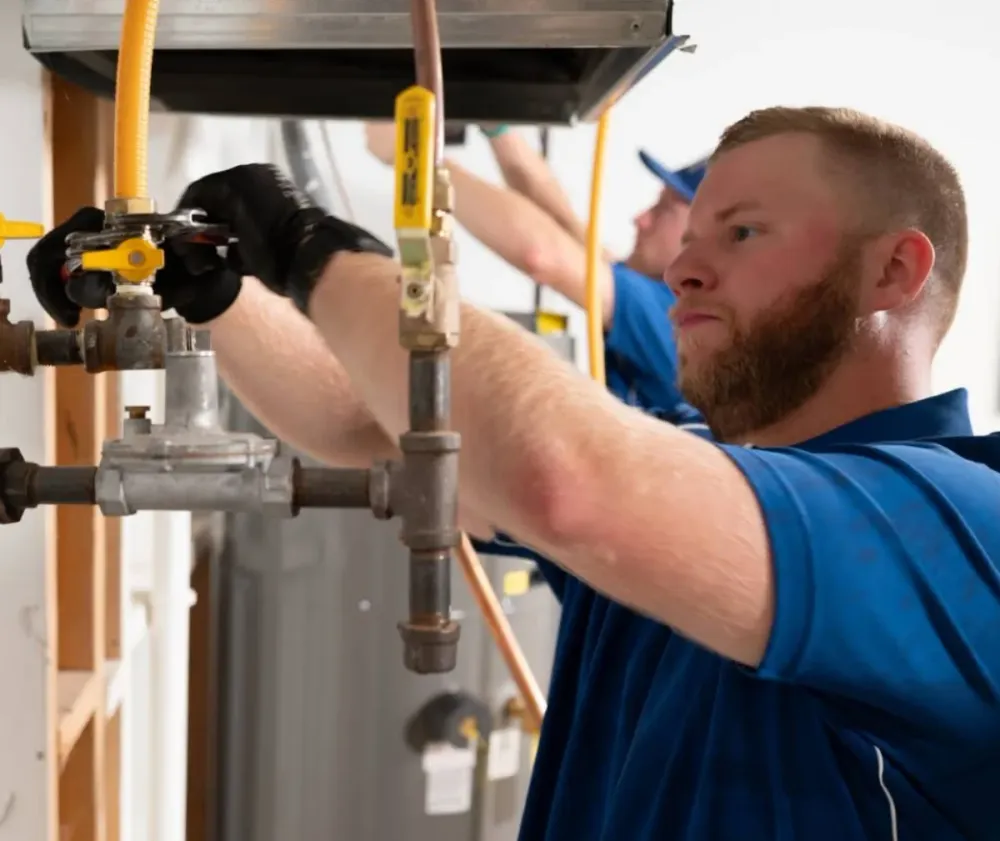
Pricing Breakdown by Boiler Type
Standard Gas Boiler Replacement
A standard 80 to 85% AFUE gas boiler typically costs $10,000 to $13,000 installed in the Twin Cities, making it the budget choice for a straightforward like-for-like swap.
What's typically included: the boiler unit, basic installation labor, removal and disposal of the old boiler, a new expansion tank, and connection to existing venting and gas supply.
What costs extra: new venting if you upgrade later, gas line modifications, new circulator pumps or zone valves, and any near-boiler piping that has corroded.
Cost example: a 1,500 square foot St. Paul story-and-a-half with an existing chimney-vented boiler and hot water radiators usually runs $11,000 to $12,000 for a mid-efficiency gas replacement.
High-Efficiency Condensing Boiler
Condensing boilers at 90 to 98% AFUE run $13,000 to $18,000 or more installed, with the higher fuel savings offsetting the bigger upfront cost over time.
What's typically included: the condensing unit, PVC venting, condensate drainage, and installation.
What costs extra: a condensate pump if there's no nearby floor drain, chimney abandonment or liner work, and outdoor reset controls (though those often pay for themselves).
Cost example: a 2,200 square foot Minneapolis home switching from an old chimney-vented boiler to a wall-mounted condensing unit often lands between $15,000 and $17,500 once new venting is factored in.
Combi Boiler
Combi boilers, which handle both home heating and domestic hot water in one unit, cost $11,500 to $16,000 installed and appeal to homeowners who want to free up space by removing a separate water heater.
These make the most sense in smaller homes with one or two bathrooms. In a large house with high simultaneous hot water demand, a combi can struggle, so sizing and household use matter here more than usual.
Steam Boiler
Steam boiler replacement runs $12,000 to $18,000 in the Twin Cities, a range driven by the age of the homes these systems serve and the specialized labor involved.
Steam is common in older St. Paul and Minneapolis houses. Replacing a steam boiler is not the same job as a hot water boiler, and fewer contractors do it well. If someone quotes you a bargain price to convert steam to forced air or hot water, understand that's a much larger project involving new distribution throughout the house, not a simple boiler swap.
Rebates That Lower Your Cost
Minnesota homeowners can lower boiler replacement costs through CenterPoint Energy rebates on qualifying high-efficiency equipment.
CenterPoint offers residential rebates on qualifying high-efficiency boilers, plus a separate rebate for annual boiler tune-ups. Homeowners with Xcel Energy gas service, common in St. Paul and parts of the east metro, can check Xcel’s residential heating rebates instead. Rebate amounts change year to year, so confirm the current figure with your installer or your utility’s rebate page before you buy.
The federal 25C Energy Efficient Home Improvement Credit, which used to cover 30% of a qualifying high-efficiency boiler up to $600, ended for equipment installed after December 31, 2025. Boilers installed in 2026 no longer qualify, which makes utility rebates the main way to bring down the upfront cost.
A utility rebate won’t erase the price difference between a standard and a high-efficiency boiler. Combined with lower gas bills over a six-month heating season, though, it shortens the payback period.
How to Get the Best Price on Boiler Replacement
The best price comes from planning ahead, getting a few detailed quotes, and choosing efficiency that matches how hard your system works in a Minnesota winter.
Get multiple quotes. Three written estimates give you a real sense of the market. Look past the bottom-line number to what each quote includes: venting, permits, disposal, and warranty terms all belong in writing.
Ask for flat-rate pricing. Reputable Twin Cities companies quote a fixed price for the job rather than open-ended hourly labor. Flat-rate pricing means no surprise on the invoice if the install takes longer than expected.
Time it for the off-season. Replacing in spring or early fall avoids emergency rates and gives you room to compare. A boiler installed in April costs less than the same boiler installed at 2 a.m. in January.
Right-size the unit. Insist on a heat-loss calculation. A properly sized boiler costs less to buy and less to run than an oversized one a contractor guessed at.
Warning Signs of Boiler Pricing Problems
Watch for quotes far below the local range, pressure to skip permits, and vague estimates that leave out venting, disposal, or warranty details.
A price that undercuts every other bid by thousands usually means something got left out, whether that's a permit, proper venting, or a licensed installer. Boiler work in Minneapolis and St. Paul requires a mechanical permit and inspection. A contractor who wants to skip the permit is exposing you to safety and resale problems down the road. And any estimate that won't put the full scope in writing, unit, labor, venting, disposal, and warranty, is a quote you can't actually compare.

For Boiler Replacement in Minneapolis-St. Paul, Choose MSP Plumbing Heating Air
For Twin Cities homeowners weighing a boiler replacement, MSP Plumbing Heating Air offers upfront fixed-price quotes, licensed technicians, and more than a century of local heating experience.
MSP has served the Minneapolis-St. Paul metro since 1918 as a family-owned company. Their team of 50-plus licensed technicians handles furnace, boiler, heat pump, and mini-split work across Dakota, Ramsey, Hennepin, Washington, Anoka, Scott, and Carver counties. Every boiler quote comes as a fixed price agreed on before work starts, backed by a 100% satisfaction guarantee, and financing is available for larger replacements.
The company holds a Minnesota HVAC license (#MB003372), carries BBB accreditation, and won the 2024 Carrier President's Award. With more than 4,000 verified five-star reviews, MSP is a steady option for homeowners who want boiler sizing done right and pricing they can see before committing.
Frequently Asked Questions
How much does it cost to replace a boiler in Minneapolis?
Boiler replacement in Minneapolis averages about $11,500 in 2026, with most jobs falling between $10,000 for a standard gas unit and $18,000 for a high-efficiency condensing boiler.
The final price depends on the boiler type, the size your home needs, and whether the job requires venting changes or gas line work. A like-for-like gas swap sits at the lower end, while switching to a condensing or combi unit adds cost.
How long does a boiler last in Minnesota?
Most boilers last 15 to 25 years, though hard-working units in Minnesota's long heating season often land in the middle of that range.
Regular maintenance extends the life. If your boiler is past 15 years old, needs frequent repairs, or your heating bills keep climbing, it's worth pricing a replacement before it fails mid-winter.
Is a high-efficiency boiler worth the extra cost in the Twin Cities?
For most Twin Cities homes, a high-efficiency boiler pays back its higher upfront cost through lower fuel bills over a heating season that runs six months or longer.
The savings are largest for homes with older, low-efficiency units. Rebates from CenterPoint Energy and the federal 25C tax credit also reduce the price gap, which shortens the payback period.
Do I need a permit to replace a boiler in St. Paul or Minneapolis?
Yes. Both St. Paul and Minneapolis require a mechanical permit and inspection for boiler replacement, and a licensed contractor pulls the permit as part of the job.
Skipping the permit can create safety issues and complicate a future home sale. A legitimate quote includes the permit cost, which typically runs around $130.
What's the difference between a boiler and a furnace?
A boiler heats water and moves it through radiators or in-floor tubing, while a furnace heats air and blows it through ducts. Homes are usually built for one or the other.
If your home has radiators or baseboard heat, you have a boiler, and replacing it with a furnace would mean adding an entire duct system, which is rarely worth the cost.
Can I replace just part of my boiler to save money?
Sometimes. If the boiler itself is sound but a circulator pump, expansion tank, or control has failed, a targeted repair costs far less than full replacement.
A licensed technician can tell you whether a repair makes sense or whether you're putting money into a unit near the end of its life. For boilers under 12 years old, repair is often the smart call.
Conclusion
Boiler replacement in the Minneapolis-St. Paul metro runs $10,000 to $18,000 in 2026, and the right number for your home comes down to type, efficiency, sizing, and timing.
The homeowners who pay the least are the ones who plan ahead, get a few detailed written quotes, take advantage of CenterPoint and federal rebates, and work with a licensed local company that sizes the system correctly. If your boiler is aging and you'd rather replace it on your terms than in an emergency, MSP Plumbing Heating Air offers fixed-price quotes and same-week scheduling across the Twin Cities. Contact us today to learn more.